
The Embodied Voice
Today, I want to focus on physical preparation.

The Fluid Voice is built on deeply human skills we all have access to. Some come naturally to us. Others, we must practice consciously to reclaim. It´s an archetype: a symbolic figure embodying the facets of a grounded, conscious, and connected human being.
(For more context, see the introduction to this series.)
(For a review of the nine pillars of The Fluid Voice, go here.)
In this letter, you’ll find:
An introduction to the second pillar of The Fluid Voice
Two practical exercises to begin your practice
Before we begin
Here’s my two cents: performing in front of a large crowd of unfamiliar people is unnatural to us humans. The sympathetic nervous system sees it as a threat, something we should fight, flee from, or freeze in front of.
Some will disagree with this, and that’s fine. One objection might be: But some people love being on stage, they get energized by it!
And yes, that’s true. Some people come alive on stage. Even I have, but only after extensive preparation.
For me, performing didn’t come naturally.
I had to prepare. Mentally and physically.
And I don’t think I’m alone in this.
Today, I want to focus on that physical preparation, not because the mental part isn’t essential, but because sometimes we need to look at one layer at a time before we reconnect them.
I should also clarify what I mean by “performing in front of a large crowd.” I’m defining it broadly: speaking, singing, a job interview, leading a meeting, presenting, or even writing, any expression we bring into a space where we need our bodies with us to show up fully.
Let’s begin.
Introducing the Second Pillar: The Embodied Voice
The Embodied Voice is built from a series of practices that support one another:
Breathwork — grounding the nervous system and creating presence.
Body language — the silent communication that shapes how others feel us.
Voice management — using the voice as an instrument of authentic expression.
I’ve chosen to begin with breathing. It’s the origin of everything human.
Why? I spent years learning breath techniques while studying classical singing. And I’ve said it before: it was therapy for me. It gave me a tool for grounding myself and meeting the world more confidently.
I want to share this knowledge, or wisdom, if you like.
Let’s begin.
Observe a sleeping child. Or a puppy. Watch how the round belly rises and falls gently. Notice the natural breathing rhythm. How effortlessly the breath flows. They instinctively know how. We were once like them.
When did we lose that wisdom?
We didn´t.
Our body wisdom is already in us. It’s a part of us we don’t have to learn; we’re born with it.
Yet living in a stress-filled society slowly dulls our access to it. Our shoulders rise. Our jaws clench. We hold our breath without noticing. Daily life, work, family responsibilities, navigating logistics, and rushing through commutes...
We lose touch with our relaxed bodies and calm minds.
Eventually, we operate as if these innate resources are gone. As if our way of living scared them away.
Breathing is the most natural thing. Yet many of us have to relearn it.

In Stressful Situations
Under stress, our breathing becomes shallow and high in the chest. Our heart rate spikes. The breath shortens. Sometimes we even stop breathing for a moment. All of these signals a threat to the body, increasing tension, pain, anxiety, and fear.
This is why deep, grounded breathing matters, especially before we step into any kind of “stage.”
Research shows that slow, abdominal breathing supports healthy physiological balance, calming the sympathetic nervous system and activating the parasympathetic “rest-and-digest” response.
Understanding Your Breath
Breathing is a dynamic interplay between your diaphragm, lungs, and the surrounding muscles.
What Happens During Inhalation?
When you inhale:
The diaphragm contracts and flattens
The lungs expand
The intercostals, obliques, abdominals, and back muscles expand outward with the breath
Together they form a natural ring around your waist — a ring that expands on the inhale and softens on the exhale.
A Note on Low Breathing
For this ring of muscles to activate properly, the air needs to travel low into the body. If the breath stays high in the chest, the ring won’t fully engage.
A helpful indicator is your shoulders: if they lift on the inhale, it’s a sign the air isn’t traveling down far enough. Aim for steady, relaxed shoulders while the expansion happens lower, around your waist, ribs, and lower back. This is what allows the ring to widen naturally and support you from within.
Practice: Awakening Your Body Wisdom
Now, let´s practice.
Exercise 1: Feel the Muscle Groups
Place one hand on your stomach below the belly button and the other on the side of your waist. Breathe in slowly through your nose and feel the abdominals and obliques subtly expand with the breath.
Then place one hand on your lower back muscles and the other on your intercostal muscles. Breathe in and out, noticing how all these areas participate — expanding on the inhale, softening on the exhale.
⭐️ This is your natural ring of breathing muscles — the diaphragm, intercostals, obliques, abdominals, and lower back. Every inhale expands this ring. Every exhale softens it.
A note on the lower back muscles: They can be hard to sense.
Try lying on the floor with your knees bent. Inhale slowly through your nose. Exhale through a small opening in your mouth. Feel how your lower back subtly presses into the floor on the inhale. No? Try again, slower.
You can also try this sitting in a chair or leaning against a wall, allowing your back to expand into the support behind you.
Exercise 2: The Golden Ring
Now that you’ve located the physical ring, you will sense it energetically.
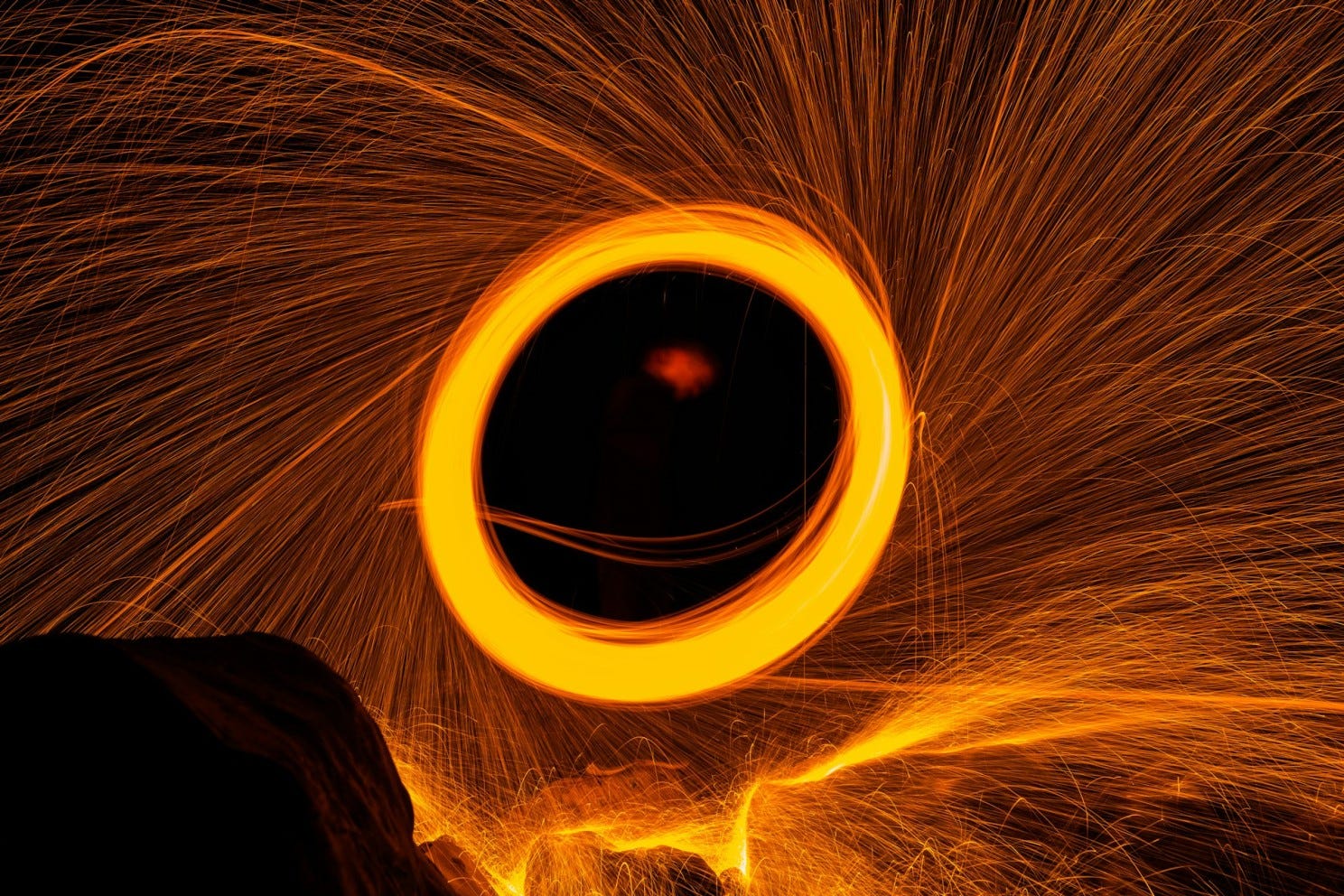
Imagine this same ring — the exact one you felt in Exercise 1 — as a golden ring of light around your waist.
As you inhale, and the muscles expand, imagine the ring brightening and widening, glowing from the inside.
As you exhale, and the ring softens, let the golden light dim and settle inward, returning toward your center.
This is the Golden Ring — not a ring that tightens, but one that expands with your breath and softens with release.
A ring of energy created by your own inhale and exhale.
When stress rises, before you go on stage, return to this mental image. Even one cycle of illumination → softening can signal safety to your nervous system.
What Comes Next
The Embodied Voice isn’t built in a day. It’s a practice, one that requires patience and curiosity.
In the next letter, we’ll explore the third pillar of The Fluid Voice.
Curious to learn more? Join my newsletter,
Until next time, Paulina Martinez